
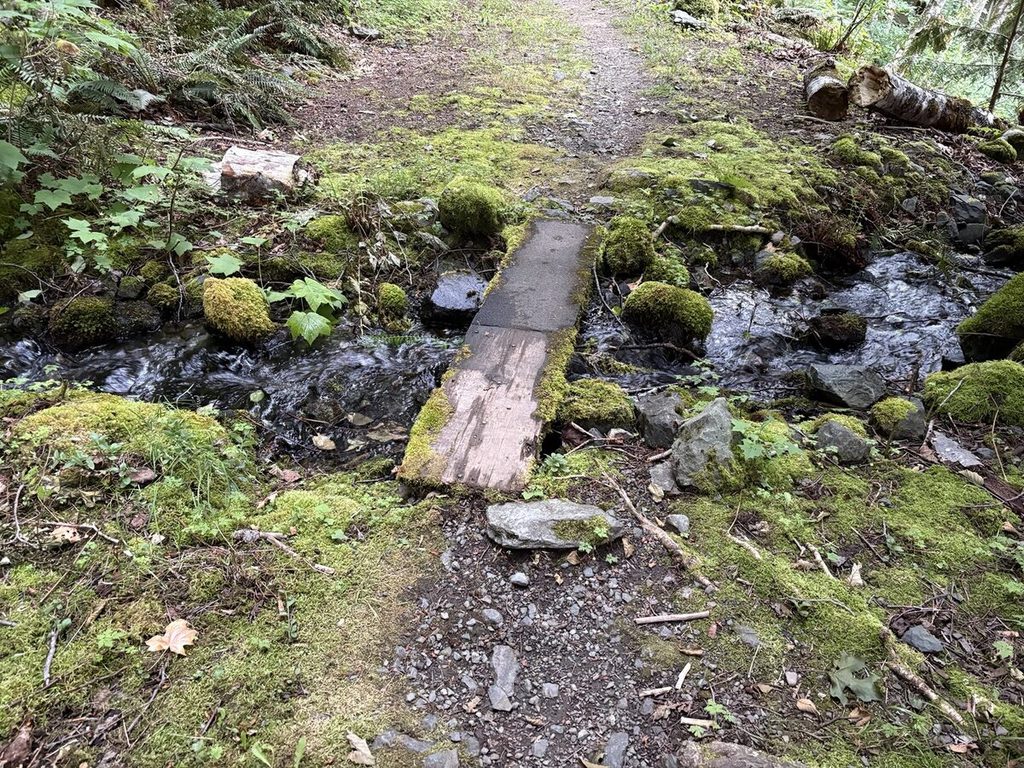
This was my first silent retreat, and I arrived full of curiosity. A few days of meditation, forest walks and silence gave me a glimpse into a different way of slowing down and being present.
It felt like an adventure from the start. My sister and I followed directions to a remote retreat centre that involved watching for balloons tied to a stop sign near an unmarked turnoff, followed by a small sign attached to a tree. From there, we were to travel another 2.6 kilometres along a rough gravel road. For part of the way, the road ran beside a lake with a steep drop-off, while signs warned us to watch for falling rock. I began to wonder just how remote this retreat was going to be.
Settling In
I was relieved when we finally arrived and were greeted warmly by a friend who was co-hosting the retreat. The resident dog was also there but was not quite as welcoming. As my friend accompanied us to our rooms, she invited us, once we had settled in, to head over to the meditation hall and choose a spot that would remain ours for the duration of the retreat. The idea was that returning to the same place for each session would help us settle more easily into the practice.
The meditation hall stood at the very end of the gravel path. It was a many-sided wooden structure, with a large window filling most of each wall section. Extending from one side was a tent-like storage area containing chairs, cushions, bolsters, blankets, small meditation benches, and a variety of other supports. We could arrange whatever we needed in our chosen spot. I chose a place beside one of the windows, overlooking the lake and the path leading to the hall, and gathered a chair, bolster, cushion, and small meditation bench to try during the retreat.
It was soon time for dinner, followed by a facility orientation. We learned that the centre had been there since the 1990s and was off the grid. Electricity was generated from a nearby creek and supplemented more recently by solar panels. There was also a diesel backup generator, so we were assured that power would not be a problem. We also learned that there were no paid staff; everyone worked on a volunteer basis. Three people lived there permanently, while the others rotated as needed.
We were told about bears in the area and the precautions we needed to take. We also learned that a schedule had been prepared and that each of us would be rotated through dish duty following meals. There were three jobs per cleanup: pre-washing, washing and sterilizing, and drying and sorting.
Then came a call for volunteer bell ringers. Each of our formal sessions would be announced by the ringing of the bell ten minutes before it began. My hand shot up, and I got my time slot.
Soon afterward, all 19 of us gathered in the meditation hall and settled into our chosen places. We were given the general instructions for the retreat, including when silence would begin and what would be expected of us during the coming days. We were encouraged not to talk except when necessary for practical reasons. Journalling and other activities that might distract us from the silence were also discouraged. Giving up our phones was optional, and a bag would be provided for anyone wishing to hand theirs in the following morning.
The daily schedule was also explained. A wake-up bell would sound at 6:45 each morning, followed by our first meditation (or “sit”) at 7:15 and breakfast at 8:00. The rest of each day would alternate between silent and guided meditations, walking meditation, mindful movement, meals, and short breaks in between these.
By the time everything had been explained and I returned to my room, I was spent. I showered, checked in with my husband and then went to bed.
First Full Day
As an early riser by nature, I was awake long before the bell sounded the next morning. The birds helped with that. They were particularly vocal and sounded very close by.
I put on my hiking shoes and set out to explore the property. Buildings and accommodations were scattered throughout the forest, including the main lodge where meals were served and where I was staying, several cabins and a number of tents. More than anything, I simply enjoyed being outside, surrounded by trees, the lake, and the sounds of nature.
Soon enough, it was time for our first sit before breakfast. We gathered in the meditation hall and settled into our chosen places. I could sense the anticipation in the room as we wondered what the weekend ahead would bring.
I enjoy sitting in silence and have practised meditation for years, so I settled in quickly. At home, though, I usually stop when I feel ready, rather than sitting for a set length of time. Sitting for a fixed 45 minutes, regardless of how I was feeling, was new for me. And so I sat, much longer than usual, accompanied by my thoughts and a few moments of quiet.
With the first session behind us, we made our way back to the main lodge for breakfast in silence. The only sounds were the quiet movements of people collecting their food, chairs shifting across the floor, dishes being placed on tables and activity coming from the kitchen.
It felt very unusual to sit at a table with five to seven other people while no one spoke. Normally, a shared meal is filled with conversation, but here we were together without the usual social expectations. At the same time, I almost felt there was a different kind of expectation, and I was not quite sure what to do. I found myself wondering where to look, whether to make eye contact and what, if anything, was expected of me.
I noticed that I was often rushing through my meal. When I became aware of it, I intentionally placed my fork or spoon on the table (soup was a common offering) and simply paused to look around the room.
Not long after breakfast, we were back in the meditation hall. At that point, the facilitators offered to collect the cellphones of anyone who wanted to be completely free of them for the weekend. I didn’t notice anyone taking them up on the offer. I kept mine and used it each day to check messages and speak with my husband.
We were then given a few simple suggestions and guided through another meditation session.
Afterward, we went outside for an introduction to walking meditation. We could walk very slowly back and forth over a small area, which was the recommended approach, or follow the paths through the forest. I much preferred the forest.
Then we returned to the meditation hall for another 45 minutes of silent meditation. I was surprised by how much I enjoyed these longer silent sits.
Meditation is a broad term, and my own way of practicing it has changed over the years. At this time, I was not trying to empty my mind or force myself into stillness. For me, meditation is often about allowing myself to stop: to sit quietly, notice what is present, and give my mind and body time to slow down in their own way. Often, once I become still, I begin to notice where my body is holding tension and I make a conscious effort to let those areas soften.
My thoughts continued much as they usually do, one leading to another. From time to time, I became aware that I had been carried away by them. I would then return to the feeling of sitting, sometimes listening to the sounds around me, and always inviting the deeper awareness within myself to come to the surface and to help me experience the love that I know is there for me. Every so often, a deep breath came naturally.
The song “Songbird” came to mind often, not only during meditation but throughout the retreat. Christine McVie, who wrote it, said it was the only song that came to her complete from beginning to end after she awoke in the middle of the night. Its message of steadfast, freely given love seemed closely connected to what I was reaching toward in meditation: the deeper sense that love is present, even when I cannot always feel it.
Following the silent meditation came a shorter outdoor session in which we were offered a series of movement practices. I appreciated the simplicity of their approach, nothing fancy or difficult, just broad flowing movements followed by a little gentle shaking. This allowed some of the restlessness and stored energy to move through. I felt more balanced and steady afterward.
It was now time for lunch, again eaten in silence, and afterward I began my first shift in the kitchen. I had been assigned to the washing and sterilizing sink and, after a few instructions, was busy at work.
The person at the first sink worked very quickly, passing items to me faster than I would naturally have handled them. Although we were allowed to speak when necessary, I did not ask her to slow down and instead found myself matching her pace.
After a short break in my room, I headed back to the meditation hall when I heard the bell. This session was a guided meditation, which was fine, although I still preferred the silent sits.
Next came our first group walking meditation. We followed the forest trail together until we reached a lookout over the lake, where we stopped for a while and simply took it all in. After the walk, we had a short time to ourselves before the next session, which was a question-and-answer period.
As this was my first shift as bell ringer, I kept a close eye on my watch. My Swiss appreciation for punctuality was certainly at work. My fondness for bells may have Swiss roots too, something I explored in When Bells Were a Language. Twelve minutes before the hour, I headed outside to the bell, which stood just beyond the building where I was staying, so I would be ready to ring it precisely at the ten-minute mark.
The bell hung from a gracefully curved, weathered tree branch. Beside it, a short log suspended by ropes served as the striker. It was to be drawn back and released against the bell.
To produce a loud, clear sound, we had been told to first swing the bell away from the striker so that the log would meet it as it swung back. It sounded easy enough, but the striker had to hit the bell squarely. If it veered too far to the right or left, it produced only a dull, muffled ring. I managed a couple of good, clear rings. We had been told that three to five rings were ideal, so I still had a little learning to do. My sister came with me and learned the ropes as well.
There were not many questions during the session, and before long it was time for dinner. Afterward, we had a short break before returning to the meditation hall for the evening program. It began with another guided meditation, followed by a walking meditation and a closing loving-kindness sit. At 8:30, the day officially came to an end, and we were free to rest. After such a full first day, all I could still manage was a short walk and then I went to bed, falling asleep quickly.
Second Full Day
The next morning, the birds woke me early once again. I went out for another walk and discovered more of the property before returning to the lodge. Since the coffee for breakfast would not be ready until later, I made myself a cup of coffee and sat quietly. I became aware of a kitchen volunteer slowly and quietly chopping fruit for the breakfast salad. The unhurried pace appealed to me and reflected a way of moving through life that I am still learning for myself.
Day 2 followed the same schedule as Day 1, but with the rhythm now familiar, I found my practice deepening. Several times that day, as I sat in silence, I opened my eyes and looked out at the trees and the lake. For a few moments, the usual stream of thought seemed to fall quiet. I still felt fully myself, looking out at the landscape, but everything appeared unusually clear and vivid, and I was simply seeing what was there without immediately naming or analysing it. The experience felt peaceful, but more than anything, it felt clear.
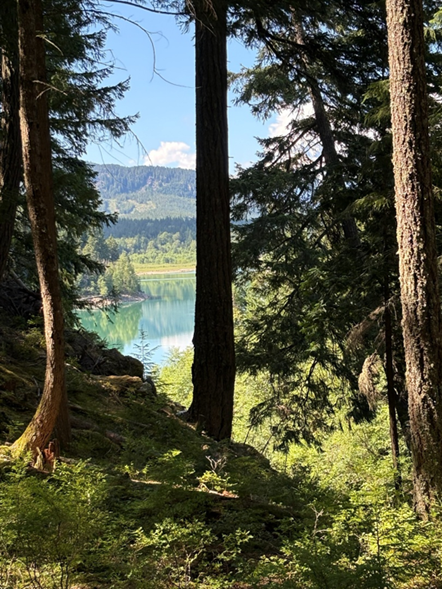
The lake near the meditation hall
That day, I also tried the small meditation bench I had chosen on the first day. Until then, I had sat in a regular chair and rested my feet on it. This time, I sat on the bench with my legs crossed in front of me. I was pleasantly surprised by how balanced and steady I felt. It made me realize how much posture and physical support can affect meditation.
Final Day
On the final morning of the retreat, one participant who often chose to lie down during meditation began to snore. Perhaps not the best position for an early-morning sit!
After breakfast, our final meal together, I completed dish duty. We then returned to the meditation hall for our final sessions, which focused on love and gratitude.
Afterward, we all made our way to the main lodge, where the retreat leaders presented the retreat centre with gifts in appreciation for hosting us. With that, the formal retreat program was complete. Several people lingered, talking quietly in the lodge or outside, before gradually heading off. The gravel road was less intimidating this time, now that I knew what to expect.
Takeaways
It has now been over a month since the retreat, and I continue to look back on it fondly. My meditations have been much like they were there. I still allow my mind to quiet through stopping, noticing what is present, softening the places where I am holding tension, and making room for the deeper sense of love and steadiness beneath it all. I have also found myself using this same process in small check-ins between activities during the day. I’m always grateful when a deeper breath occurs naturally.
I am also remembering to pause during the day to stretch and move gently, helping to release some of the physical tension and restlessness that tend to build.
I bought a meditation bench of my own and have found it to be supportive in my practice. More than anything, the retreat reminded me of a place of love and steadiness already within myself that I can return to.
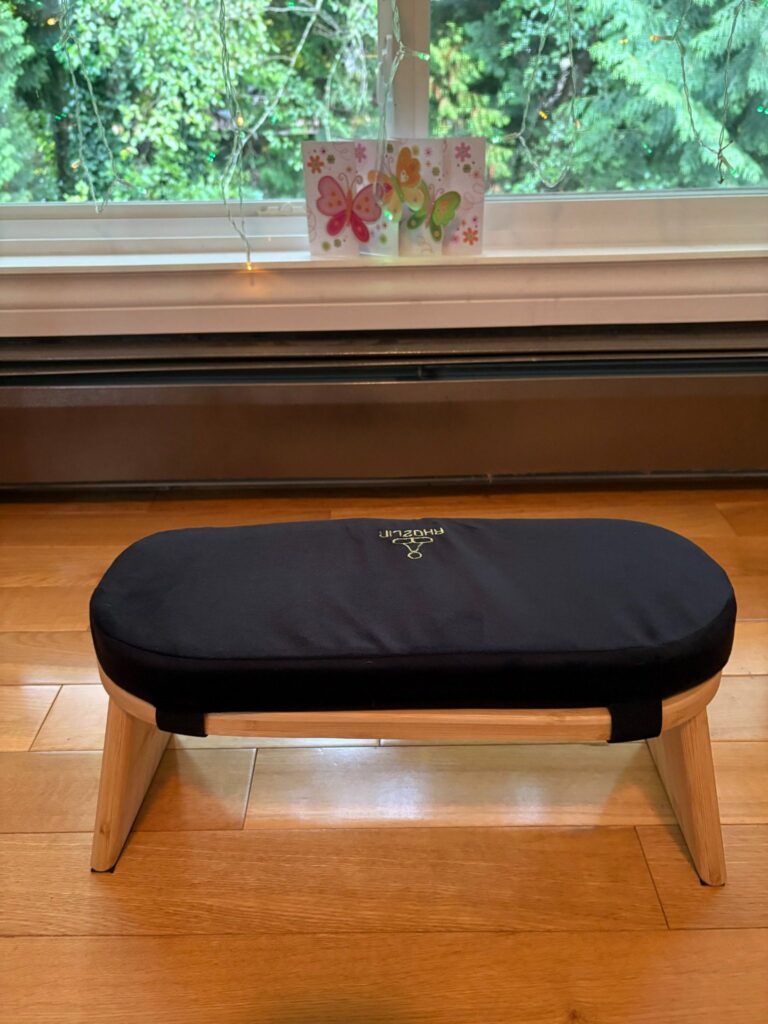
My meditation bench